
Show Support Safety Committee Meeting No. 24 – Injury Prevention and New Control Measures
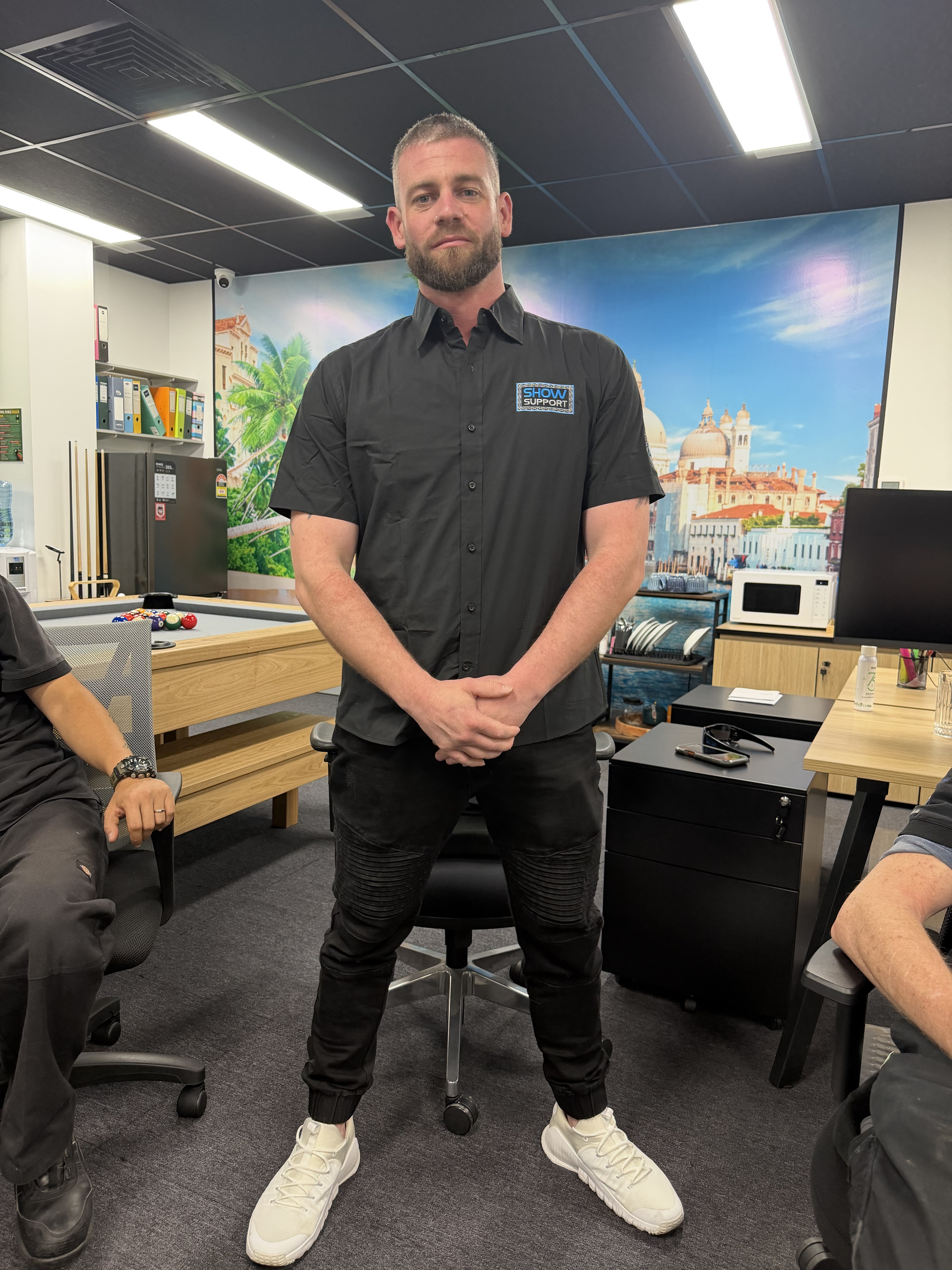
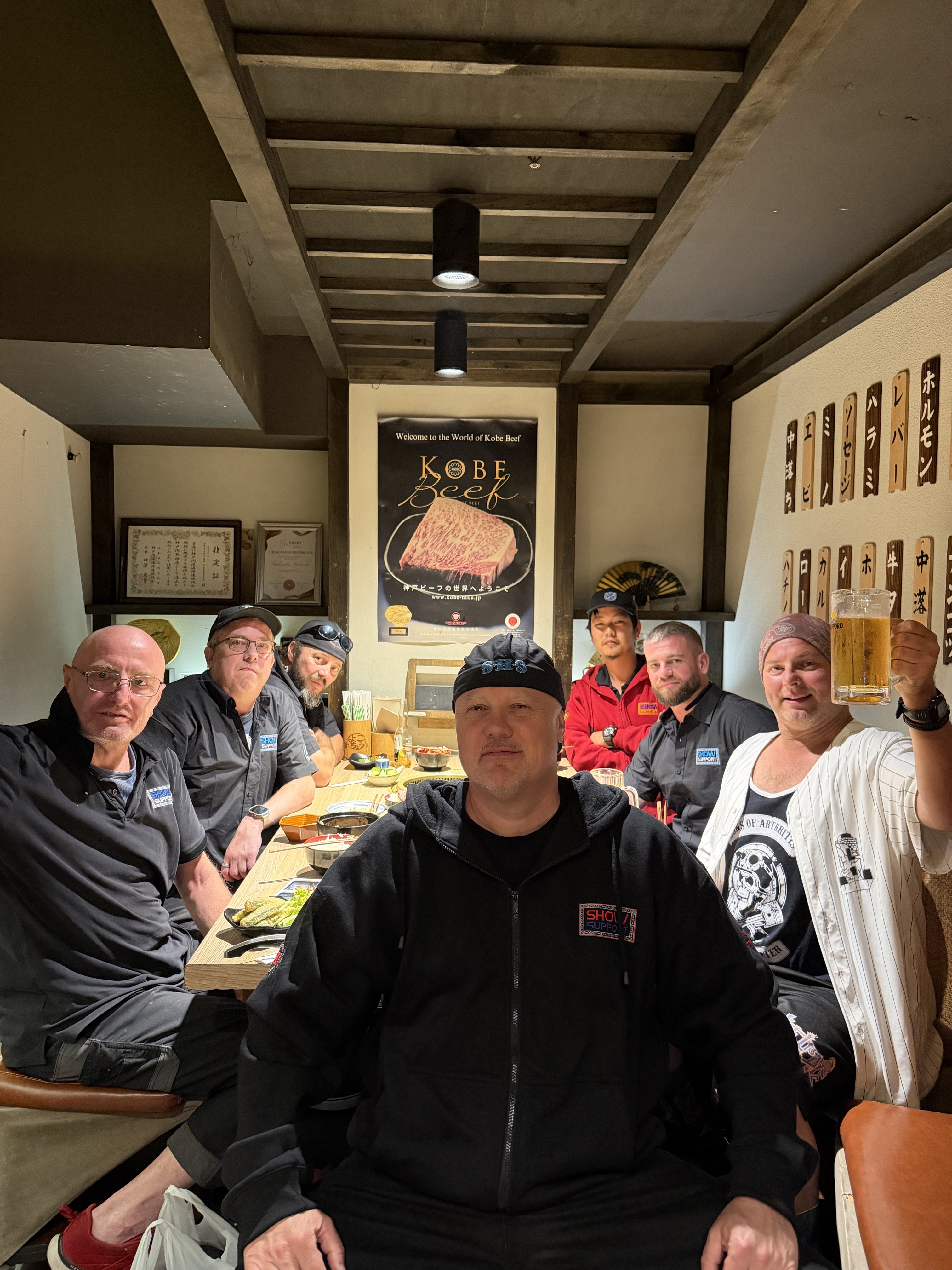
On Friday, 18 September 2026, the Show Support Joint Safety Committee held its 24th Safety Committee Meeting at the Show Support office at SHS HQ, commencing at 4:00 pm.
The meeting was chaired by David N. Neil and attended by Ben Albrecht, Richie Duarte Rudder, Luke McLaughlin, Kenny Xuan, Sam Davis, Aaron John Smith, Justin McMaugh and Jeff Ward.
The committee reviewed recent incidents, recurring injury patterns and practical measures that can be introduced to prevent similar injuries. Particular attention was given to ankle injuries involving road cases and LED wall video carts, hand and finger crush injuries, psychological injuries, and the most common types of injuries experienced by our crew.
LED Wall Video Carts and Ankle Injuries
One of the principal incidents reviewed involved a worker whose Achilles tendon was injured when struck by a following road case/cart. The committee looked closely at how large LED video carts and road cases are moved, particularly when several crew members are pushing carts in single file.
The obvious danger is that the person behind may move faster than the person ahead. With a large, heavy cart, even a relatively small difference in speed can result in the cart striking the ankles or legs of the person in front. Visibility can also be restricted when the cart is sufficiently high or wide that the person pushing cannot properly see the route ahead.
The committee agreed that the answer is not simply to tell the crew to “be careful”. The task needs a systematic method of movement, with communication, spacing, speed and supervision treated as active control measures.
Control measures agreed by the committee
The Crew Chief or Client Supervisor is responsible for explaining the moving procedure to the crew before the task begins. Communication must then continue between workers throughout the movement. If somebody needs to stop, slow down or change direction, this must be communicated immediately.
Carts are to be moved at a slow, controlled and reasonable walking pace. There is no operational reason to rush a line of carts when doing so increases the likelihood of an injury.
Where practicable, a minimum two-metre exclusion zone or separation should be maintained between carts. A worker must never allow the cart they are controlling to become close enough to strike the ankles or legs of the person ahead.
Where sufficient crew are available, a spotter should be appointed. Rather than concentrating on moving an individual case, the spotter can observe the overall operation and watch the spacing between carts, speed, obstacles and movement of the crew.
For large carts where the person pushing cannot see clearly over or around the cart, two workers should be used: one person pushing and another positioned safely at the front or side to steer, guide and monitor the route ahead. The guide must never place themselves directly in the path of the moving cart or in a position where they could become trapped between the cart and another object.
Suitable safety footwear is required, and hands, feet and legs should be kept clear of wheels, pinch points and crush zones.
Most importantly, if visibility becomes poor, the route is congested or uneven, safe spacing cannot be maintained, or another hazard develops, the movement is to stop until the problem is controlled. Every worker has both the authority and responsibility to raise a safety concern and call for the task to slow down or stop.
The underlying message is straightforward: communication, controlled speed, safe spacing and active supervision.
Hand and Finger Crush Injuries
The committee also reviewed a hand crush injury at Scenic World in Katoomba, where a worker’s finger became trapped between logs during a lift.
An important part of the discussion was whether gloves would have prevented the injury. The committee’s discussion concluded that the more important issue was communication and keeping hands out of the danger zone, rather than relying on PPE as the primary control.
The committee revisited Show Support’s Operation Safe Hands campaign. The essential principle is that if a worker realises their hand is about to become trapped, they should speak up immediately. Where necessary, the team should be prepared to put the load down safely before someone’s hand becomes trapped, using a clear countdown so everyone releases together.
This incident again demonstrated why communication before and during a lift is critical. Workers should discuss how an awkward or heavy item will be moved before the lift starts, rather than trying to solve the problem while everyone is already carrying the load. The Operation Safe Hands campaign includes the following vital advice:
If Your Hand Is About to Get Caught:
- Speak up immediately—let your lifting partner(s) know.
- Be ready to drop the item as close to the ground as safely possible.
- Drop it before your hand gets trapped.
- Count down loudly so everyone can release together:
“Three, two, one, drop!”
Learning From Recurring Injuries
The committee also reviewed the nine most common recurring injury types affecting Show Support crew over the previous two years. These include recurring problems such as back strains, lacerations, crushed fingers, ankle injuries and hand crush injuries.
Previous safety initiatives were discussed, including Operation Safe Hands, the Don’t Try To Be A Hero When Lifting campaign addressing manual-handling injuries, and the No Unauthorised Knife Use campaign.
One encouraging result discussed at the meeting was that knife injuries have been eliminated since the anti-knife campaign was introduced in November 2025 (knock on wood). The committee considered this an indication that repeatedly identifying a particular hazard, educating crew about it and reinforcing the control measures can have a meaningful effect on incidents.
The committee therefore agreed to develop a quiz, blog post and safety compendium covering the nine most common injury types, rather than waiting for another incident before reminding people of the risks.
The committee also discussed adding the common-injury information to the pre-start process, so crew see the hazards regularly, and investigating whether safety quizzes can remain permanently available through the crew app as a voluntary reference and refresher.
Psychological Health and Safety
Psychosocial injuries were also discussed as an important part of workplace safety.
Show Support will continue developing educational material dealing with psychological health and safety, including guidance about recognising and responding to distressed workers and reporting psychological safety concerns.
The committee agreed that a psychosocial injuries quiz and one-page compendium should be developed, based on the Psychological Health and Psychological Hazards Policy P048. Soren Rigby in Melbourne plans to attend a mental-health first-aid course with Crew Care and report back to the committee, with Ben Albrecht and David Neil expressing interest in undertaking the course as well.
What Happens Next
Today’s meeting resulted in several concrete actions rather than simply reviewing incidents. The agreed LED video-cart and ankle-injury controls will be communicated to crew, including two-person operation of large cases where visibility requires it, a two-metre separation wherever practicable, controlled speed, continuous communication and the use of spotters where appropriate.
Show Support will also prepare further educational material on the most common injuries, including quizzes, blog material and concise safety reference documents. Psychological safety material will be developed as part of the same ongoing program.
The purpose of reviewing incidents is not to assign blame. It is to understand how the injury occurred, what we can learn from it and what practical control can prevent the same thing happening to another crew member.
Every person on a Show Support crew has a part to play. Communicate before you move, keep your hands and body out of crush zones, maintain safe spacing, don’t rush, and speak up if something does not look safe.
If a task cannot be performed safely, stop the task and fix the problem before continuing.
Thanks very much for taking the time to read this important Safety Announcement and, as always, if you have any feedback you would like to communicate to the MD, please use the link in the Show Support Website header, also found here:
https://www.showsupport.com.au/feedback/
Please stay safe out there and keep up the fantastic work.
Regards,
David Neil
SHSMD